
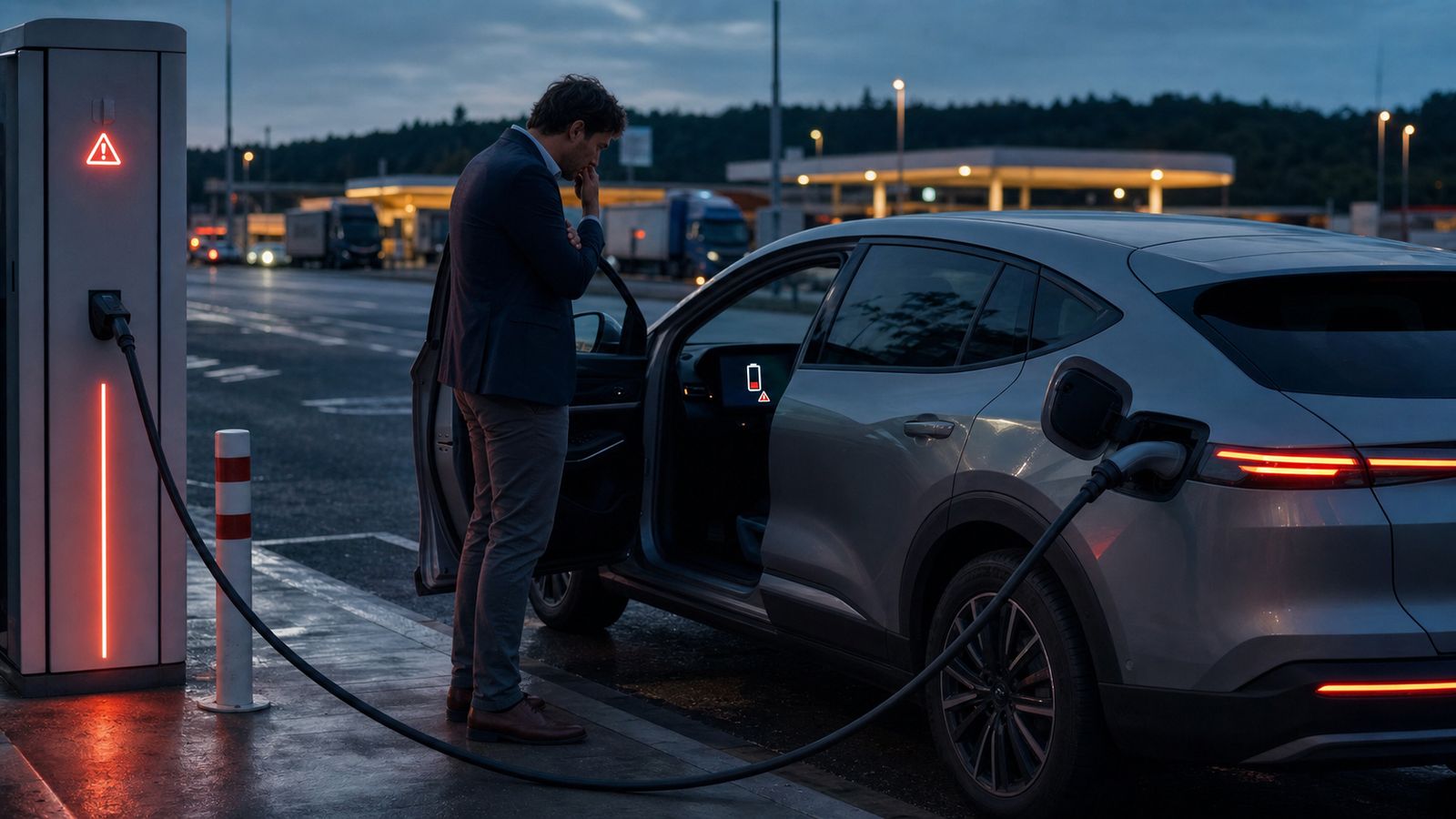
I arrived at Frankfurt Airport excited to rent an electric car.
The car was amazing. It was quiet, responsive and incredibly enjoyable to drive. We entered the highway, accelerated, and I thought, "This is the future."
About 20 minutes later, that excitement began to turn into anxiety.
We needed to charge, so we entered the first service area and started looking for the EV-charging signs. When we finally found the chargers and connected the car, a message appeared on the screen:
"Charging is delayed until power is available."
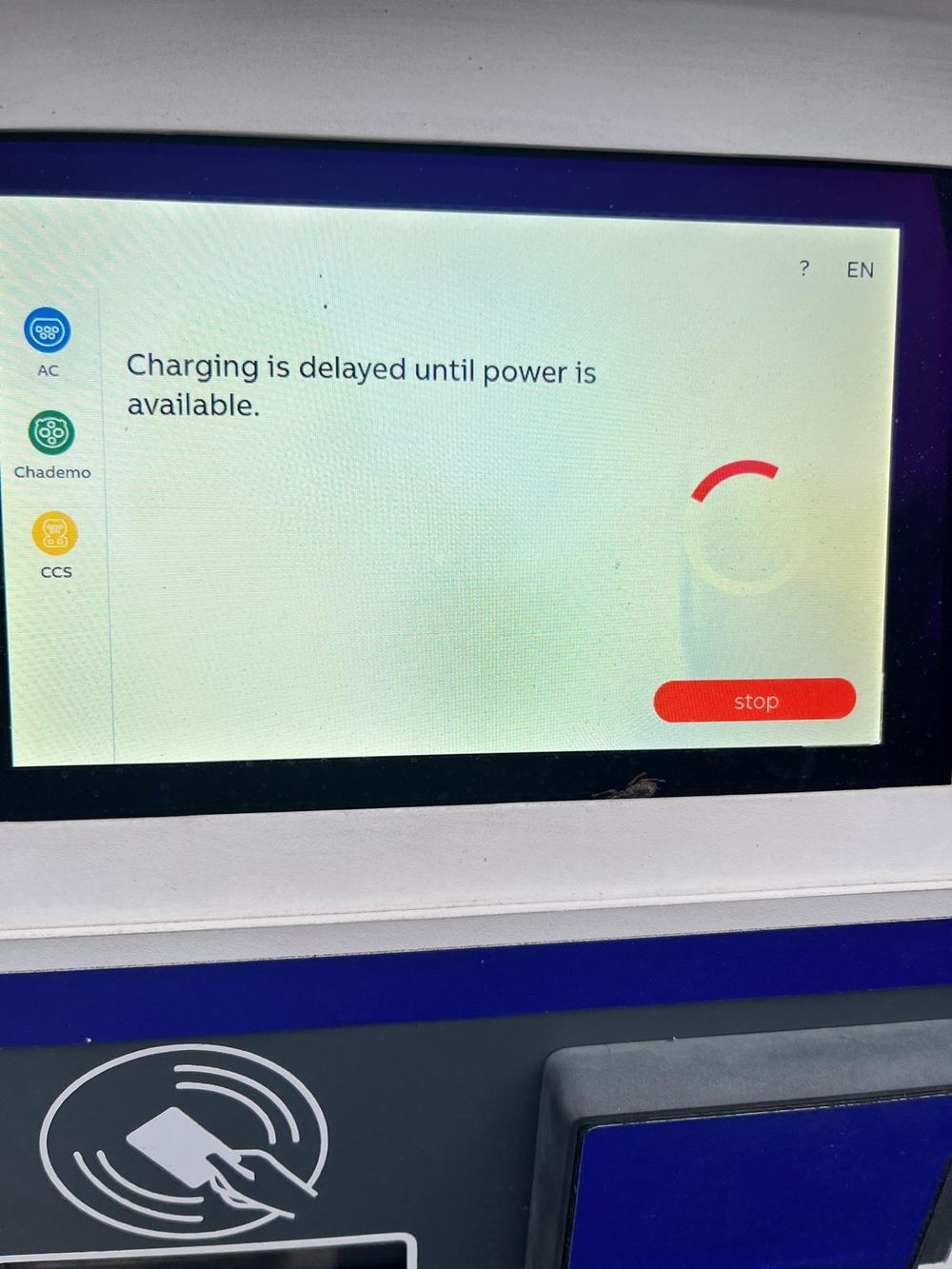
The charger was there. The car was ready. But the power was not available.
We continued to the next charging site, hoping to solve the problem quickly. When we arrived, the charger did not work.
At that point, I was sweating. I did not know where we could charge, how long it would take, or whether we had enough battery to reach the next available station. To conserve energy, we slowed down and drove in the right lane alongside the trucks.
The exciting experience of driving an electric car had become a stressful calculation of distance, battery capacity and risk. We had to cancel meetings and reorganize our entire trip.
Later, I experienced something very similar in the United States. I arrived at a fast-charging station with the car at 24 percent. The infrastructure was labeled "fast charging," but the vehicle received only 12 kW.
These experiences revealed a much larger problem
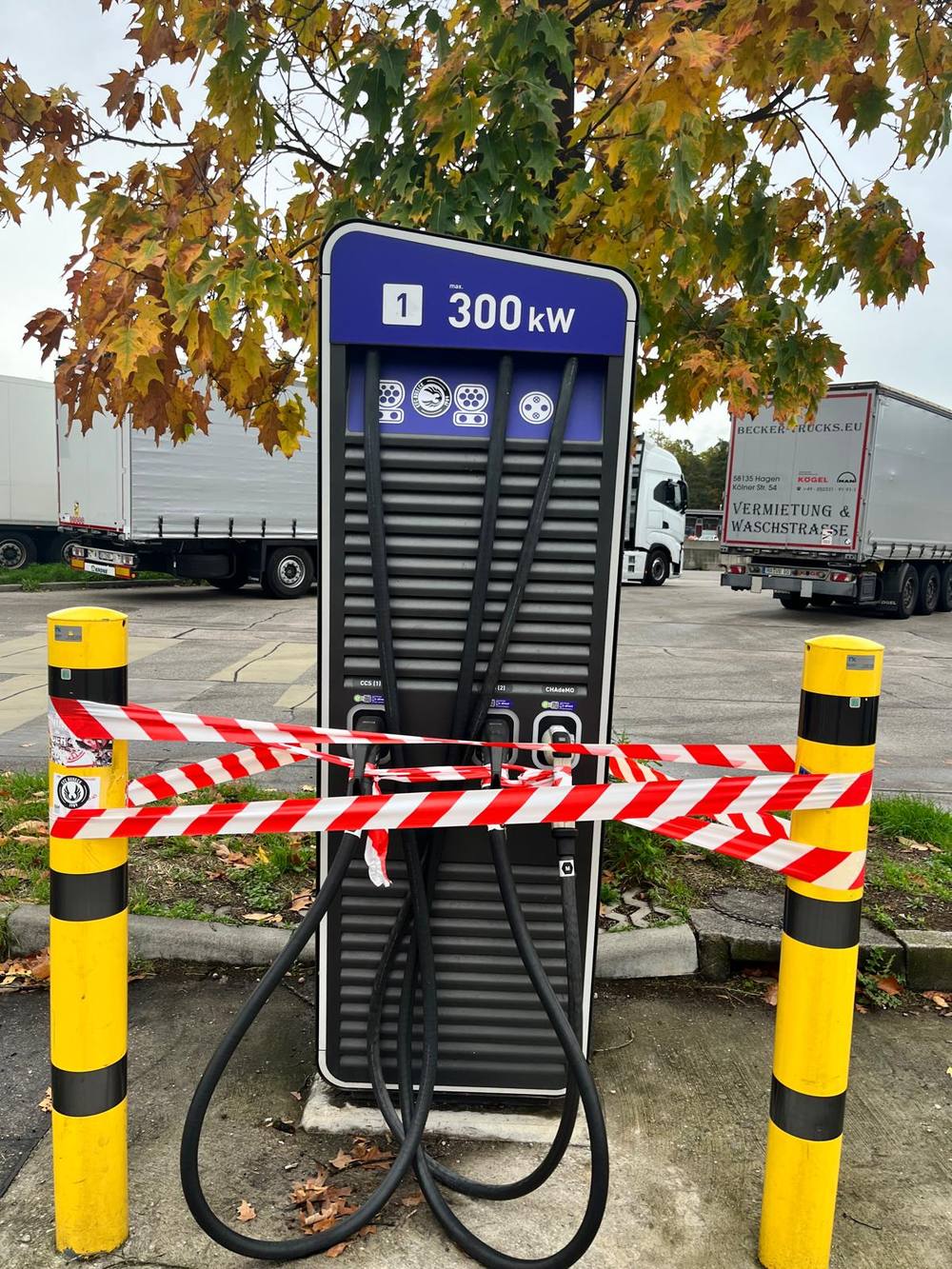
The world is installing more chargers, but a charger alone does not create power. A 300 kW charger is of little value when it is unavailable, out of service, or located at a site without sufficient electrical capacity.
That was when I began asking myself a simple question:
Why should drivers and businesses have to worry about where and when power will be available?
And then a more important question:
What if we could bring power to almost any suitable location and transform it into an EV-charging site?
That question became the starting point for Immedia Power.
Bigger than EV charging
We initially focused on EV charging, but we soon understood that the problem was much larger. EV fleets, data centers, ports, industrial facilities and other critical operations are all competing for access to electricity. Their power requirements are increasing faster than the grid can expand.
Traditional infrastructure can take years to permit, connect and upgrade. Businesses cannot always afford to wait.
The grid has traditionally determined where and when businesses can grow. Immedia Power changes that. We combine our unique power-generation system with Power OS, our embedded AI layer, to create the DOR, a new distributed power platform that gives space-constrained sites the on-site power they need to run and scale without waiting on the grid.
Each unit targets 200 kW continuous output from 15 square feet, with multi-fuel capability and Power OS functions for load coordination, diagnostics, and predictive maintenance.
Compact, intelligent, and modular, the DOR is being designed as an adaptable platform for different load profiles, from EV fleets and data centers to ports and industrial facilities.
What began as one frustrating journey became a much larger mission:
To remove power availability as a barrier to electrification, growth and critical infrastructure.
The grid defines where power is available.
Immedia Power brings power to where it is needed.
If you're building or investing in this space, we'd like to hear from you.